30 Capsules • 400 mg Combined Blends • 60-Day Guarantee
FemiCore – daily support for women’s bladder comfort and urinary microbiome balance
FemiCore is a once-daily women's urinary-wellness formula combining a 350 mg herbal blend with a 50 mg five-strain Lactobacillus blend. It pairs four urinary-health botanicals with five Lactobacillus strains in a once-daily capsule aimed at women researching bladder comfort, recurrent-UTI prevention strategies and feminine microbiome support.
- 350 mg herbal blend + 50 mg probiotic blend
- Cranberry standardized to 30% PACs on seller-published label
- Five named Lactobacillus strains
- 30 capsules per bottle; one capsule daily
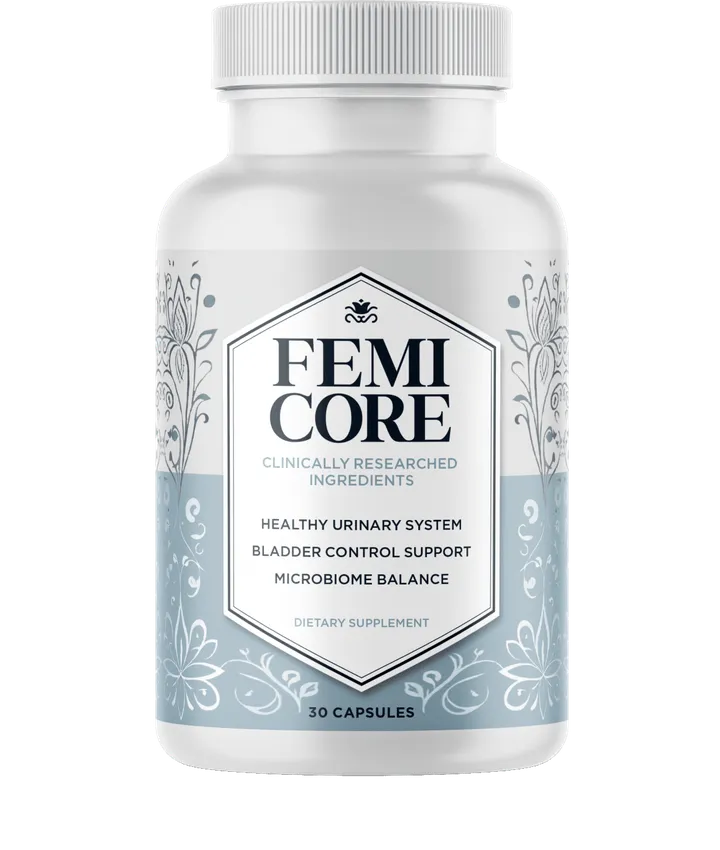
FemiCore at a glance
What FemiCore is built to support
FemiCore is a once-daily women's urinary-wellness formula combining a 350 mg herbal blend with a 50 mg five-strain Lactobacillus blend. It pairs four urinary-health botanicals with five Lactobacillus strains in a once-daily capsule aimed at women researching bladder comfort, recurrent-UTI prevention strategies and feminine microbiome support.
How the formula is intended to work
Seller-published label images describe one capsule daily containing a 350 mg herbal blend (Mimosa pudica seed extract, cranberry extract standardized to 30% proanthocyanidins, bearberry leaf and berberine HCl extract) plus a 50 mg probiotic blend (L. crispatus LCr86, L. acidophilus LA88, L. plantarum N13, L. gasseri LG08 and L. casei LC16). Individual botanical doses and probiotic CFU counts are not disclosed.
FemiCore ingredients & declared dosages
| Ingredient | Declared amount | Manufacturer / label context | Evidence / potential role |
|---|---|---|---|
| Lactobacillus crispatus | Part of 50 mg probiotic blend | Seller-declared urinary/vaginal-health probiotic strain; individual CFU not disclosed | Human urogenital-probiotic evidence is strain- and route-specific; presence in an oral blend does not guarantee colonization or UTI prevention. [seller][probiotic-ruti-review][probiotic-ruti-rct] |
| Lactobacillus acidophilus | Part of 50 mg probiotic blend | Seller-declared urinary/vaginal-health probiotic strain; individual CFU not disclosed | Human urogenital-probiotic evidence is strain- and route-specific; presence in an oral blend does not guarantee colonization or UTI prevention. [seller][probiotic-ruti-review][probiotic-ruti-rct] |
| Lactobacillus plantarum | Part of 50 mg probiotic blend | Seller-declared urinary/vaginal-health probiotic strain; individual CFU not disclosed | Human urogenital-probiotic evidence is strain- and route-specific; presence in an oral blend does not guarantee colonization or UTI prevention. [seller][probiotic-ruti-review][probiotic-ruti-rct] |
| Lactobacillus gasseri | Part of 50 mg probiotic blend | Seller-declared urinary/vaginal-health probiotic strain; individual CFU not disclosed | Human urogenital-probiotic evidence is strain- and route-specific; presence in an oral blend does not guarantee colonization or UTI prevention. [seller][probiotic-ruti-review][probiotic-ruti-rct] |
| Lactobacillus casei | Part of 50 mg probiotic blend | Seller-declared urinary/vaginal-health probiotic strain; individual CFU not disclosed | Human urogenital-probiotic evidence is strain- and route-specific; presence in an oral blend does not guarantee colonization or UTI prevention. [seller][probiotic-ruti-review][probiotic-ruti-rct] |
| Cranberry extract | Not verified | Part of 350 mg herbal blend; seller label states 30% PAC standardization | Cranberry products probably reduce recurrent UTI risk in some women, but benefit depends on formulation and PAC exposure. [cranberry-cochrane][nccih-women] |
| Bearberry (uva-ursi) leaf | Not verified | Part of 350 mg herbal blend; individual dose undisclosed | Traditional-use evidence exists for short-term mild urinary symptoms, but European guidance limits duration and advises against pregnancy/lactation use. [ema-bearberry] |
| Berberine HCl extract | Not verified | Part of 350 mg herbal blend; individual dose undisclosed | Berberine has metabolic research and meaningful interaction/pregnancy cautions; urinary-bladder claims for this blend are not established. [nccih-berberine] |
| Mimosa pudica seed extract | Not verified | Part of 350 mg herbal blend; individual dose undisclosed | No robust clinical evidence was identified establishing Mimosa pudica as a bladder-control intervention in this formulation. [seller][ruti-guidance] |
FemiCore price & package options
Package pricing is shown only when it has a dated commercial source. Seller pricing can change without notice.
Starter
2 Bottles
60-day supply
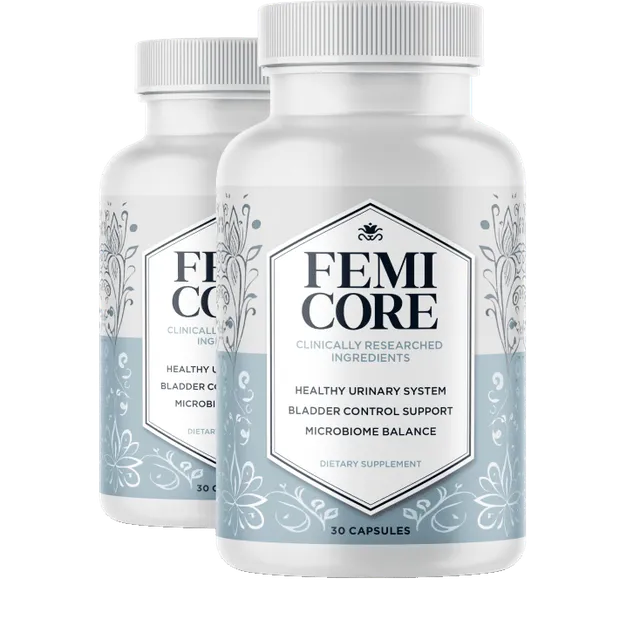
$79 / bottle
Total $158
Entry package
$9.99 U.S. shipping advertised
View 2-Bottle OfferVerified 2026-10-23 · Current FemiCore seller page lists 2 bottles at $79 each / $158 total plus $9.99 shipping.
Popular
3 Bottles
90-day supply
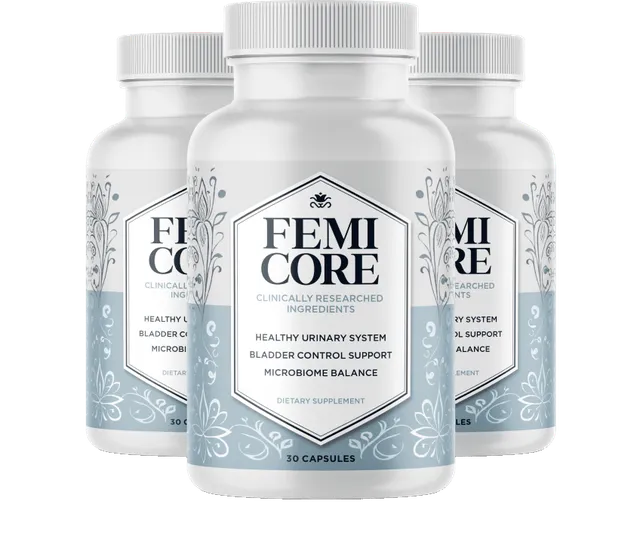
$69 / bottle
Total $207
2 + 1 bottle package
Free shipping advertised
View 3-Bottle OfferVerified 2026-10-23 · Current FemiCore seller page lists 3 bottles at $69 each / $207 total with free shipping.
Best value
6 Bottles
180-day supply

$49 / bottle
Total $294
3 + 3 bottle package
Free shipping and bonuses advertised
View 6-Bottle OfferVerified 2026-10-23 · Current FemiCore seller page lists 6 bottles at $49 each / $294 total with free shipping and bonus items.
Where to buy FemiCore
FemiCore is sold through the current seller checkout in 2-, 3- and 6-bottle packages. This page is independent; seller claims about bladder control or preventing infections are separated from clinical evidence on cranberry, probiotics and individual botanicals.
Current seller pages list 2 bottles at $79 each, 3 bottles at $69 each and 6 bottles at $49 each, with free U.S. shipping on the 3- and 6-bottle options. Promotional terms can change.
Safety, interactions & who should be cautious
- Symptoms of an active UTI—especially fever, flank/back pain, vomiting, blood in urine, pregnancy or rapidly worsening symptoms—need medical assessment; do not rely on FemiCore to treat an infection. [ruti-guidance][nccih-women]
- Berberine can interact with medicines and should not be used during pregnancy or breastfeeding; medication users should discuss the formula with a clinician. [nccih-berberine]
- Bearberry is traditionally intended for short-term use; European guidance advises against use during pregnancy/lactation and does not support indefinite daily use. FemiCore does not disclose the individual bearberry dose. [ema-bearberry]
What the evidence says
| Claim / question | Evidence assessment | Strength |
|---|---|---|
| Does cranberry help prevent recurrent UTIs? | Yes, to a degree. A large Cochrane review found cranberry products probably reduce symptomatic, culture-verified recurrent UTIs in women. However, cranberry is not a treatment for an active infection, and effectiveness depends on formulation and dose. FemiCore does not disclose the individual cranberry dose, so direct comparison is limited. [cranberry-cochrane][nccih-women] | moderate |
| Do Lactobacillus probiotics prevent recurrent UTIs? | Evidence is promising but mixed and route-specific. A 2026 systematic review found intravaginal Lactobacillus showed the most consistent benefit; oral probiotic evidence was less certain. FemiCore is an oral capsule with undisclosed CFU counts, so those results cannot be directly transferred. [probiotic-ruti-review][probiotic-ruti-rct] | limited |
| Does FemiCore have evidence for bladder leaks or urgency? | The seller positions the product for bladder control, but the strongest cited evidence base concerns recurrent UTI prevention and microbiome composition—not treatment of urinary incontinence. No randomized trial of the finished FemiCore formula was identified. [seller][ruti-guidance] | not established |
| Can FemiCore treat an active UTI? | No. Cranberry and probiotics may be considered preventive adjuncts in selected people, but current UTI symptoms need appropriate diagnosis and treatment. Fever, flank pain, vomiting or worsening symptoms can signal a more serious infection. [nccih-women][ruti-guidance] | strong |
Potential strengths
- Current label structure is relatively transparent at the blend level
- Cranberry and Lactobacillus have genuine urinary-health research
- Simple once-daily format
Important limitations
- Individual botanical doses and probiotic CFU counts are not disclosed
- No finished-formula randomized trial identified
- Evidence for oral probiotics and bladder-control symptoms is weaker than seller messaging suggests
Where FemiCore has evidence—and where the marketing goes further
FemiCore is a more plausible urinary-wellness formula than a generic botanical capsule because it combines a standardized cranberry extract with named Lactobacillus strains. The strongest evidence, however, is narrower than the marketing: cranberry may help reduce recurrent UTI risk, while probiotic benefits depend heavily on strain and route and appear stronger for vaginal than oral delivery. The proprietary blends obscure the exact cranberry, bearberry, berberine and probiotic doses, which makes it impossible to know how closely the formula matches research protocols. It may be reasonable as an adjunct for a healthy adult discussing prevention with a clinician, but it should not be positioned as a treatment for an active UTI or a clinically proven fix for urinary incontinence.
Frequently asked questions about FemiCore
What is FemiCore?
A once-daily women’s urinary-wellness supplement combining four botanicals with five Lactobacillus strains.
What is in FemiCore?
The seller-published label lists a 350 mg herbal blend and a 50 mg probiotic blend. Individual botanical doses and probiotic CFU counts are not disclosed.
Does cranberry in FemiCore prevent UTIs?
Cranberry products can reduce recurrent UTI risk in some women, but benefit depends on dose and formulation. FemiCore does not disclose the exact cranberry amount.
Can FemiCore treat a current UTI?
No. Symptoms of an active UTI require appropriate medical evaluation and treatment.
How do you take FemiCore?
Seller materials describe one capsule daily. Follow the current bottle label and discuss long-term use with a clinician because the blend contains bearberry and berberine.
How much does FemiCore cost?
The current seller page lists 2 bottles for $158, 3 for $207 and 6 for $294; promotions can change.
Does FemiCore have a guarantee?
The seller currently advertises a 60-day money-back guarantee.
References
- FemiCore seller page — FemiCore seller. Source
- Cranberries for preventing urinary tract infections — PubMed / Cochrane (2023). Source
- Probiotic prophylaxis in adult women with recurrent uncomplicated urinary tract infections: A systematic review of randomized controlled trials — PubMed (2026). Source
- Effectiveness of Prophylactic Oral and/or Vaginal Probiotic Supplementation in the Prevention of Recurrent Urinary Tract Infections — PubMed (2023). Source
- Women’s Health and Complementary Approaches — NCCIH. Source
- Berberine and Weight Loss: What You Need To Know — NCCIH. Source
- European Union herbal monograph on Arctostaphylos uva-ursi folium — European Medicines Agency. Source
- Recurrent UTI in Women: Diagnosis and Management — PubMed (2026). Source
- Complementary Health Approaches for BPH — NCCIH. Source
Change history
- — Created evidence-reviewed FemiCore page with verified current package pricing, proprietary-blend label context, recurrent-UTI evidence and medication/pregnancy safety cautions; kept noindex pending attribution.
- — Expanded manufacturer-declared ingredient rows and authoritative evidence references; refreshed page freshness metadata after the material content update.